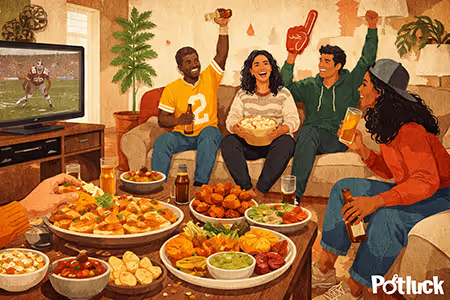

When the game ends and people start to head home, it’s easy to think the watch party is over. The snacks are gone, the TV is off, and everyone slips back into their regular routines. But the moments that come after the final score are often what determine whether the gathering becomes a one-time event or the start of something ongoing.
Great watch parties don’t just happen once. They become part of a group’s rhythm because people leave feeling connected, included, and eager to do it again. That continuity doesn’t require more effort—it just requires a little intention.
Why the After Matters as Much as the Game
What people remember most about a watch party usually isn’t the exact play-by-play. It’s who they were sitting next to, what made everyone laugh, and how it felt to experience the game together. Those impressions linger long after the score fades.
When hosts acknowledge that shared experience instead of letting it disappear, gatherings start to stack on each other. One watch party leads naturally to the next because the memory is still alive.
Shared experiences are shared memories. And memories turn attendance into belonging.
Capture the Moment While It’s Fresh
The easiest way to extend the life of a watch party is to capture it. A few photos, a group shot during halftime, or a candid moment after a big play can anchor the experience in a way that words alone don’t.
Potluck’s Moments feature gives those memories a home. Instead of photos getting lost across phones and group texts, everyone can share and revisit them in one place. It reinforces that the watch party was something you did together, not just something that happened.
That shared reflection keeps the connection going without forcing it.
Close the Loop Without Making It Formal
Following up after a watch party doesn’t need to be a production. A simple thank-you, a comment on a photo, or a casual note about how fun it was helps close the loop. It signals appreciation and reinforces the sense that showing up mattered.
When that follow-up happens in the same space as the original plan, it feels natural. Guests don’t have to switch contexts or wonder where the conversation lives. The gathering has a beginning, middle, and end—and that completeness makes people more likely to return.
Let Traditions Emerge Naturally
Not every watch party needs to turn into a standing commitment. Some will. Some won’t. The goal isn’t to force tradition, but to make room for it.
When people enjoy themselves and feel included, patterns form on their own. Maybe it’s playoff games, rivalry matchups, or the first game of the season. Over time, those gatherings stop needing explanation. They become part of the group’s identity.
Potluck supports this by making it easy to reuse the structure that already worked. The planning feels lighter each time because the expectations are familiar and the responsibility is shared.
Keep the Focus on Connection, Not Consistency
It’s tempting to think successful gatherings require perfect follow-through. They don’t. Missed games and busy seasons are normal. What matters is that when people do come together, it feels meaningful.
Shared experience is more important than communication alone. A well-planned watch party, followed by a small moment of reflection, does more to build connection than constant check-ins ever could.
Ready for the Next One
You don’t have to plan the next watch party before the last one ends. You just have to leave the door open.
By capturing the moment, sharing the memory, and keeping the experience connected in one place, you make it easier for the next gathering to happen when the time is right.
Potluck exists for those that make together happen—not just once, but over time. Start organizing, hold onto the memory, and let your watch parties become something people look forward to again and again.