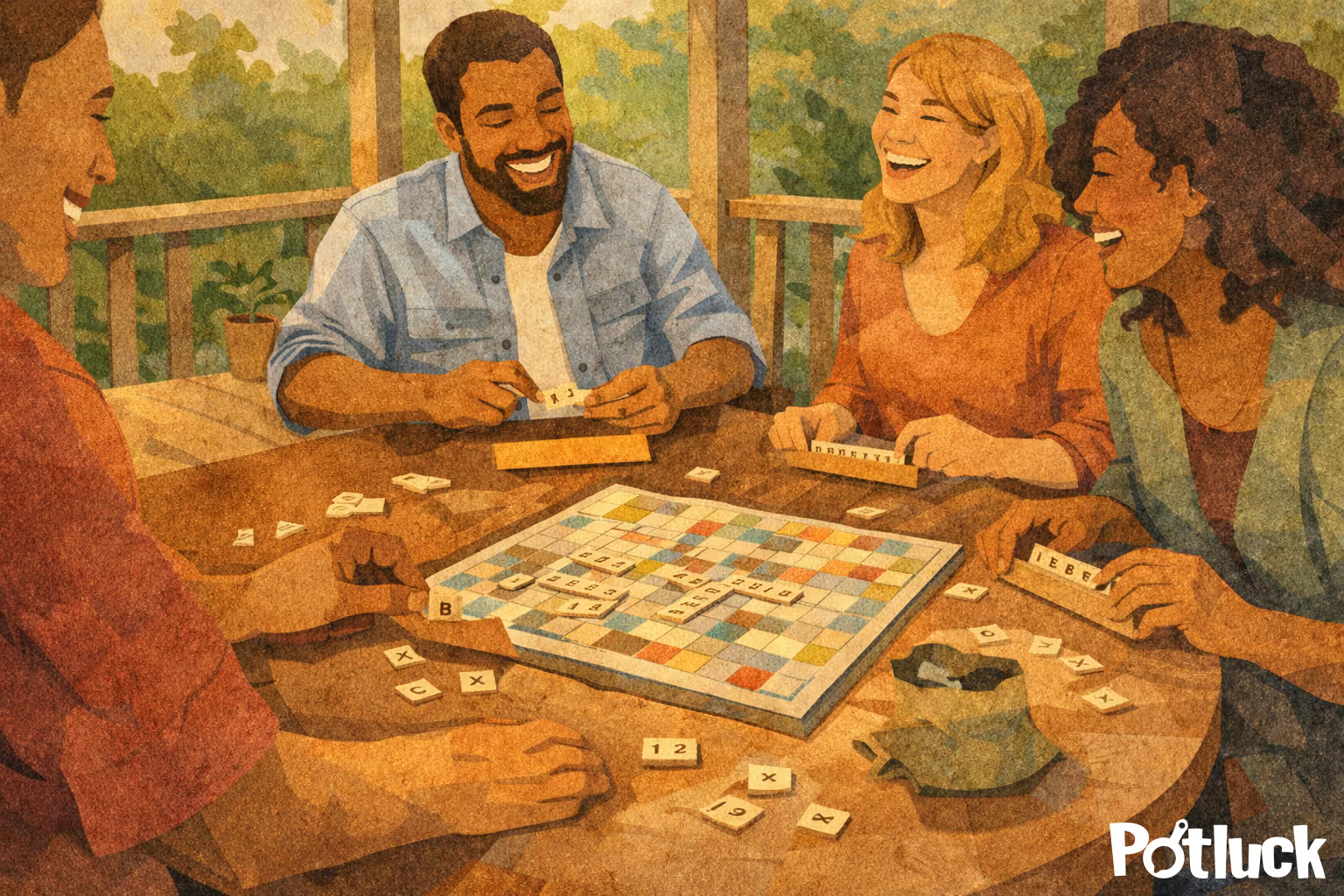
For many hosts, game night stress shows up in a very specific place: the games themselves. Choosing them can feel oddly high-stakes. Will people like this? Is it too complicated? Too boring? Too competitive? Somewhere along the way, picking a few boxes off a shelf starts to feel like it could make or break the entire evening.
The good news is that game night success rarely hinges on the games alone. What people remember isn’t whether the rules were perfectly balanced or the mechanics universally loved. They remember how it felt to be there — relaxed, included, and part of something shared. The right games support that feeling, but they don’t create it on their own.
When you stop trying to pick the “best” games and start choosing games that serve the group, planning gets lighter and the night itself gets better.
Why We Overthink Game Selection
Most of us have been to at least one game night that felt off. Maybe the rules took longer to explain than the game itself. Maybe one person dominated while others checked out. Those memories stick, and they make hosts cautious.
Add to that the pressure of hospitality — the quiet desire for people to have a good time because you invited them — and it’s easy to assume the responsibility rests squarely on your choices. If the game falls flat, the night falls flat. Or so it feels.
In reality, connection doesn’t work that way. Shared experience matters more than optimization. A slightly imperfect game played together beats a perfectly chosen game that creates tension or exclusion.
Start With People, Not Boxes
The most reliable way to choose the right games is to think about who’s coming, not what’s trending or highly rated.
Consider how well people know each other. Groups that are newer or more mixed often do better with games that encourage conversation or teamwork rather than direct competition. Established friend groups may enjoy higher stakes or inside jokes that emerge during play.
Energy matters too. A group arriving after a long workday may not want to learn something complex right away. A weekend afternoon crowd might be eager for something more involved. None of this requires deep analysis — just a quick mental check-in with the humans you’re inviting.
When games align with the people in the room, they fade into the background and let connection take center stage.
Games as Social Scaffolding
It can help to think of games as scaffolding rather than entertainment. Their job is to support interaction, not replace it.
Some games naturally create laughter and storytelling. Others spark collaboration or light debate. Still others offer quiet focus that makes side conversations feel more comfortable. There’s no single right approach, but there is a right fit for a given group and moment.
This is why flexibility matters more than precision. Having a few options available allows the night to adapt as energy shifts. If something isn’t landing, switching games isn’t a failure — it’s responsiveness.
You Don’t Have to Decide Alone
One of the easiest ways to reduce game-night pressure is to stop treating game selection as a solo task.
Inviting guests to bring a favorite game or suggest one ahead of time does more than expand your options. It signals shared ownership. When people help shape the night, they arrive more invested and more forgiving if things aren’t perfect.
Using an interactive sign-up sheet to coordinate who’s bringing what can keep this process clear and low-pressure. Everyone can see what’s already covered, and no one has to guess whether their contribution is wanted.
Shared responsibility builds stronger communities, even in small ways.
Planning for Flow, Not Control
A common trap is building the night around a single “main” game. While that can work, it also leaves little room for adjustment.
Planning for flow means thinking in chapters rather than a script. A low-pressure start. A moment of focus. A natural pause for food or conversation. A flexible ending where people linger or head out as they need to.
Games support this flow when they’re treated as tools, not commitments. You’re not locking the group into an experience; you’re offering possibilities.
When a Game Falls Flat
At some point, a game won’t work. The rules will confuse people. The vibe will be off. Someone won’t enjoy it.
This is normal.
What matters is how quickly the group feels permission to pivot. A host who can laugh, suggest a change, or invite input sets a tone of ease. That ease is contagious. It reminds everyone that the point isn’t to finish the game — it’s to be together.
Perfection kills connection. Adaptability builds it.
The Games Are the Invitation, Not the Outcome
Ultimately, games are just the doorway. The real reason people come to game night is to spend time with each other in a way that feels intentional but not heavy.
When you choose games with that in mind — as supports for shared experience rather than centerpieces — planning becomes simpler. The night becomes warmer. And people leave feeling like they were part of something, not just entertained.
If you’re getting ready to host, let the games do their job quietly. Start organizing a night where the responsibility, the laughter, and the memories are shared.