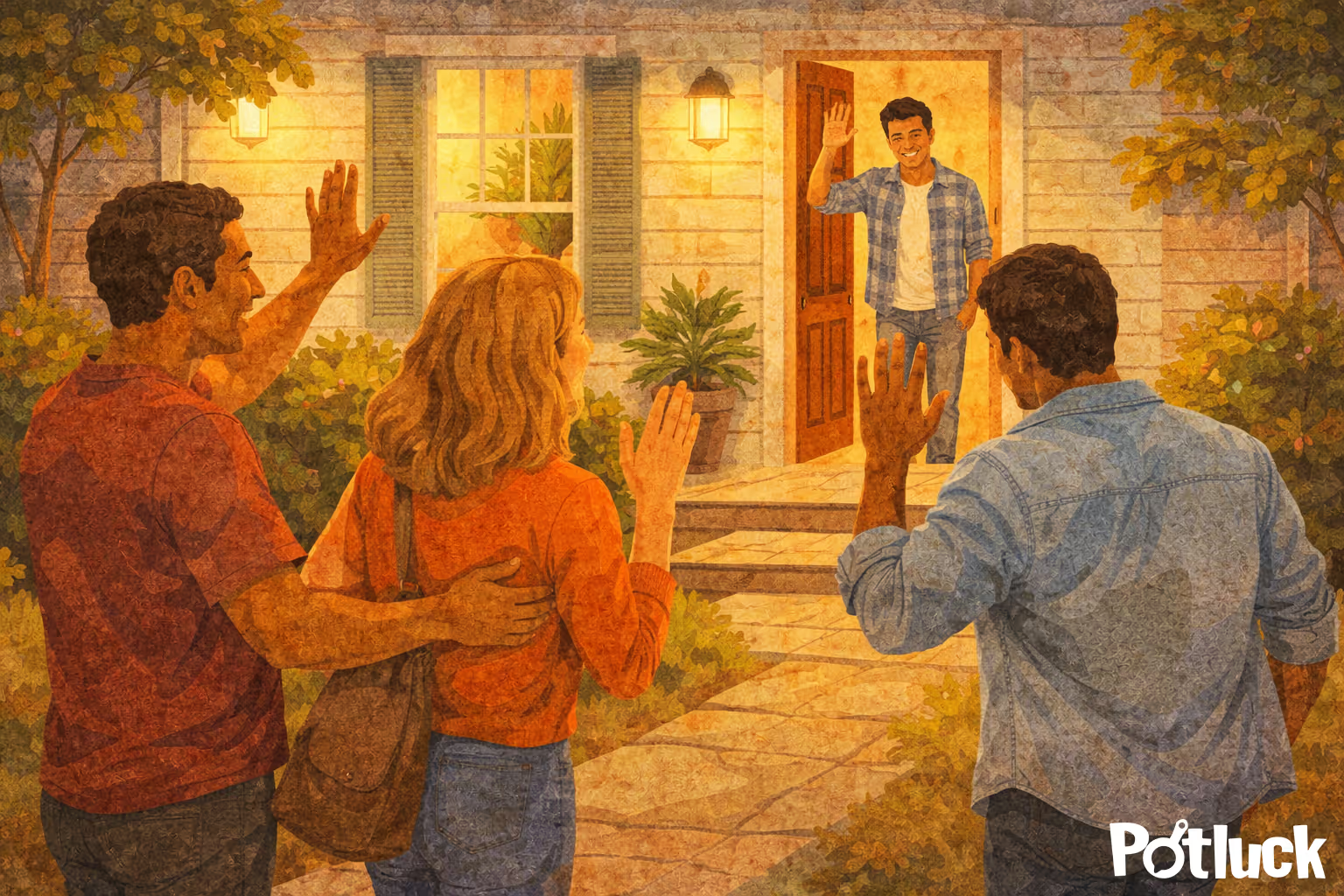
When a game night ends, there’s often a quiet emotional drop. The table is cleared. People hug goodbye. The house goes still. Even when the night was a success, it can feel strangely final — like something warm slipped through your fingers the moment the door closed.
This is where most gatherings stop. Not because they weren’t meaningful, but because no one quite knows what to do next.
The truth is, the end of a game night is not the end of the experience. It’s the hinge. What happens — or doesn’t happen — after the night determines whether it becomes a pleasant memory or the beginning of something ongoing.
Why Most Game Nights Fade
Adults are busy. We move quickly from one responsibility to the next, and even good experiences can disappear into the background of everyday life.
Without a moment of closure, gatherings blur together. People remember that they had fun, but not quite why. The emotional residue fades, and the friction of planning another night creeps back in.
This isn’t a failure of enthusiasm. It’s a lack of continuation.
Shared experiences need a gentle landing. They need acknowledgment to become shared memories.
Closing the Loop Matters
Closing the loop doesn’t require a grand gesture. It’s often as simple as naming what just happened.
A short message saying thank you. A comment about a moment that made people laugh. A recognition of someone’s contribution. These signals tell guests that the time they spent mattered.
When people feel seen after a gathering, they’re more likely to say yes again. Attendance turns into belonging when the experience is carried forward, not dropped.
Moments That Extend the Experience
Photos are powerful because they freeze shared experience in a way words can’t. But when photos scatter across individual phones or private threads, their impact is diluted.
Moments create a shared place for remembering. They allow everyone to revisit the night from different perspectives — the candid laugh, the intense concentration, the unexpected win.
This isn’t about documentation or performance. It’s about reflection. Shared experiences are shared memories, and shared memories deepen connection long after the night is over.
Letting the Group Carry It Forward
One of the quiet myths of hosting is that continuity depends on the same person doing it again.
In reality, traditions last when responsibility is distributed. When someone says, “We should do this again,” and another person offers to host next time, something important shifts. The gathering becomes communal.
Leaving space for that shift is part of thoughtful hosting. A simple note in the event chat. A casual question about interest in another night. An invitation rather than an assignment.
Shared responsibility builds stronger communities because it allows momentum to move without pressure.
From One Night to a Rhythm
Tradition doesn’t require frequency. It requires intention.
A monthly game night, a seasonal gathering, an occasional return to the same table — these rhythms give people something to look forward to without overwhelming their calendars.
What matters is that the gathering feels sustainable. That it doesn’t depend on heroic effort. That people trust it will come back around.
When gatherings repeat, connection compounds.
What People Carry With Them
Long after the specifics fade, people remember how the night made them feel. Welcome. Relaxed. Included. Part of something that mattered.
Those feelings are reinforced when the experience is acknowledged, remembered, and gently extended. When the night is treated as a chapter, not a one-off.
Keep the Door Open
If your game night brought people together in a way that felt genuine, don’t rush past it. Pause. Reflect. Share the memory.
Then, when it feels right, start planning again — not from scratch, but from connection.
Create space for Moments. Keep the event chat alive just long enough to let the night settle. Invite the group into what comes next.
Memories turn attendance into belonging. That’s how a single evening becomes a tradition.