If you serve on an HOA board or help organize neighborhood events, you’ve likely felt this tension:
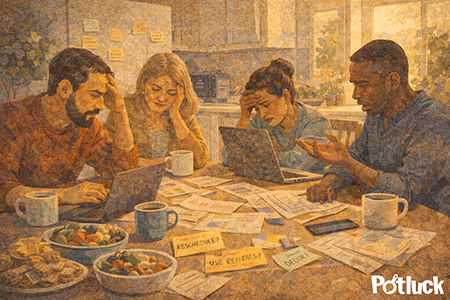
People want a stronger sense of community — but participation is inconsistent, planning falls to a few volunteers, and every event feels like starting from scratch.
Guest lists have to be rebuilt. Details have to be re-decided. The same questions get asked over and over.
This isn’t because neighbors don’t care. It’s because community requires continuity, and most planning tools aren’t built to support it.
Why Neighborhoods Need Shared Experience
A neighborhood is more than a collection of homes.
It’s a group of people who trust one another enough to share space, solve small problems, and show up for each other over time.
That trust doesn’t come from newsletters, rules, or online updates alone.
It comes from shared experience:
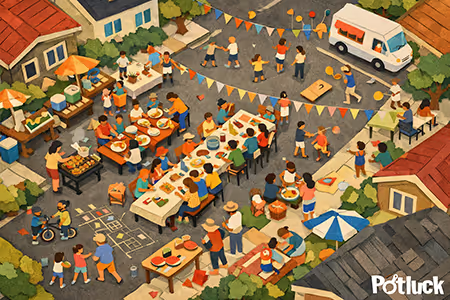
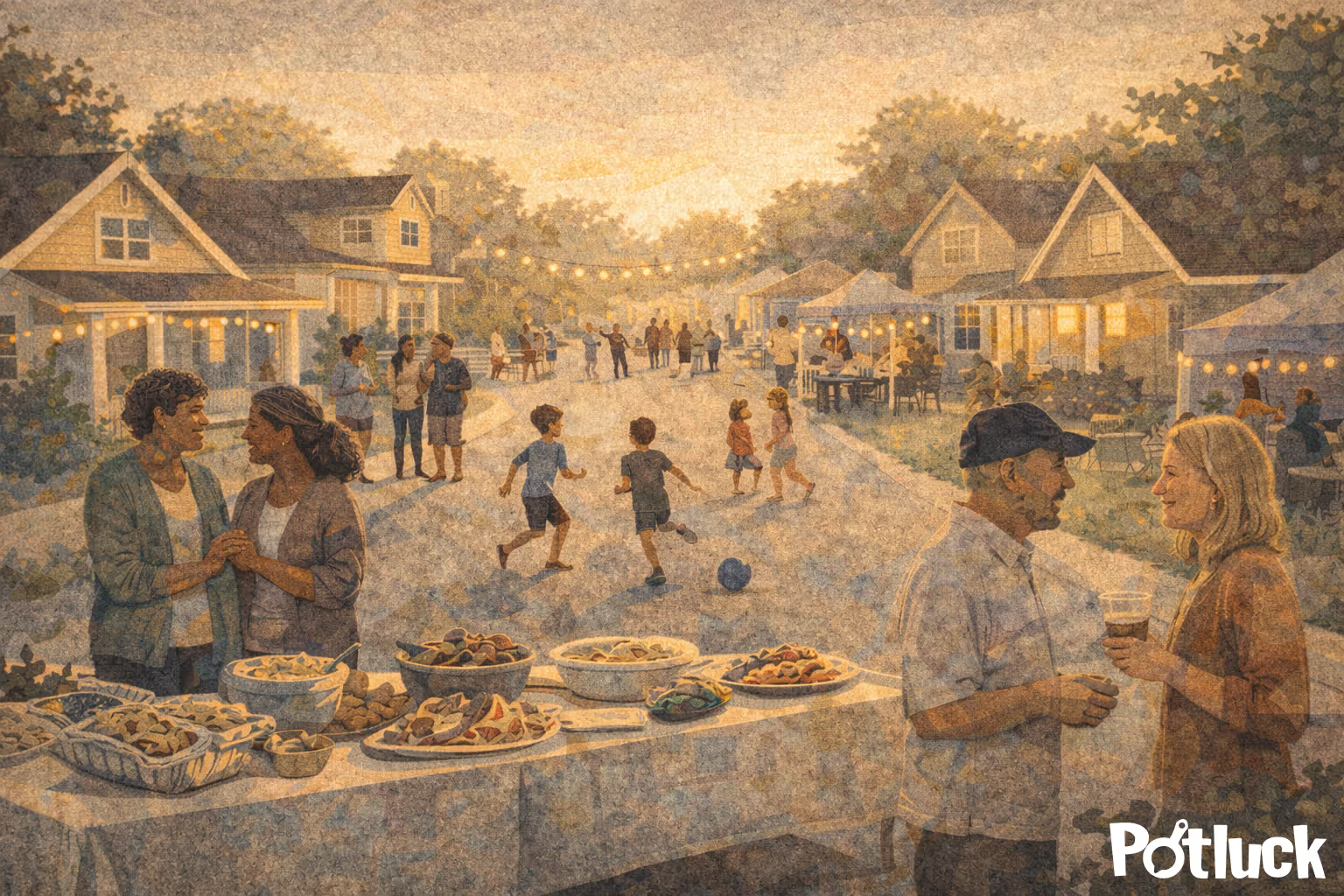
- Block parties
- Seasonal gatherings
- Repeated, familiar events that bring the same people together again and again
These moments create social fabric. And like any fabric, it’s strengthened through repetition — not one-offs.
Attendance Isn’t the Goal — Belonging Is
Many HOAs host events. Fewer build momentum from them.
That’s because attendance alone doesn’t create connection.
Belonging comes from familiarity: - Recognizing faces - Remembering names - Sharing memories across multiple gatherings
Memories turn attendance into belonging. And belonging only happens when people gather more than once.
Why HOA Events So Often Feel Harder Than They Should
Most neighborhood events struggle for the same reasons:
- Guest lists live in spreadsheets or inboxes
- Every event starts from a blank slate
- Organizers have to remember who came last time
- Planning knowledge disappears when volunteers rotate
The result? Each event feels heavier than the last.
That’s not a volunteer problem – It’s a systems problem.
Community Requires Memory
Strong neighborhoods have institutional memory. They remember: - Who tends to show up - Which events worked well - What details didn’t need to be reinvented.
When that memory isn’t captured, organizers burn out and momentum stalls.
This is especially true for recurring events like: - Annual block parties - Seasonal neighborhood gatherings - Regular HOA socials
Without continuity, every event becomes a fresh lift.
How Potluck Is Designed for Continuity
Potluck was built around a simple idea:
The more you gather, the easier gathering should become.
For organizations and power-users, Potluck provides two critical advantages:
1. Guest List Retention Through Connections
Every time you host an event on Potluck, attendees are automatically saved as Connections.
That means: - No rebuilding guest lists - No searching through old emails - No guessing who attended last time
As you host more events, your neighborhood network grows. Planning stops starting from zero.
2. Event History You Can Reuse
Potluck retains your full event history. Organizers can: Duplicate past events - Reuse structures that worked - Replicate successful block parties year after year.
Instead of reinventing, you refine. This is especially powerful for HOAs managing recurring events with rotating volunteers.
The system remembers — even when people change.
Planning Is Infrastructure for Neighborhood Life
When planning tools retain people and history, everything gets easier:
- Participation increases
- Responsibility spreads
- Volunteer burnout decreases
- Events become consistent instead of fragile
This is what shared responsibility looks like in practice. Good systems protect good intentions.
Why Paid Events Make Sense for HOAs
Neighborhood events are worth doing well.
A paid event on Potluck unlocks: Interactive sign-up sheets - Event chat for clear coordination - Moments to preserve shared memories - Retained Connections and reusable event history.
For boards organizing recurring events, paid events aren’t an upgrade. They’re infrastructure.
A paid event starts at $9.
Start With Your Next Block Party
You don’t need to overhaul everything. Start with one event.
Let Potluck retain your guest list. Duplicate the event next time. Build continuity instead of starting over.
Because strong neighborhoods aren’t built once.
They’re built again and again — together.
Start organizing your next neighborhood event
This post is part of Potluck’s ongoing series on how neighborhoods become communities.