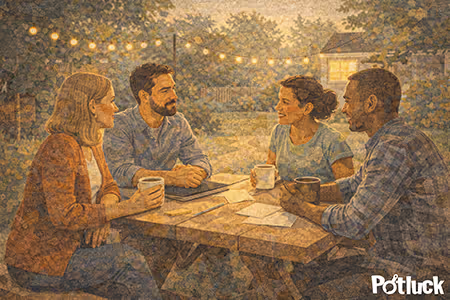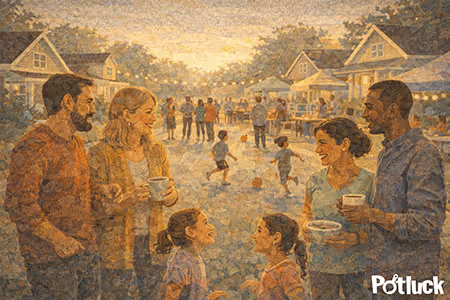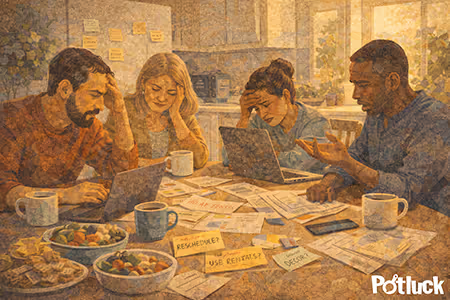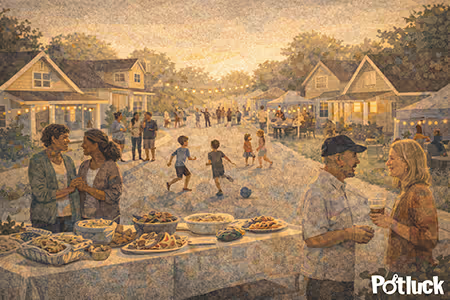
If you organize neighborhood or HOA events, you’ve probably asked this question more than once: “How do we get more people to participate?”
Usually, what that really means is:
- Fewer reminder emails
- Less follow-up
- Less last‑minute scrambling
Because chasing neighbors isn’t just frustrating — it’s unsustainable. The good news? Low participation is rarely about apathy.
It’s almost always about ambiguity.
Most Neighbors Want to Help — They Just Don’t Know How
In healthy neighborhoods, people generally want things to go well.
They just don’t want to - Volunteer blindly - Overcommit - Step on someone else’s toes.
When expectations are unclear, the safest option is to stay passive. That looks like disengagement. But it’s really hesitation.
Why Chasing People Backfires
Repeated reminders create the opposite of what organizers want.
They signal: - Disorganization - Uncertainty - That participation is optional and unimportant
Over time, neighbors learn to wait. Someone will follow up. Someone else will handle it.
Chasing trains people not to act.
Participation Requires Visibility
People are far more likely to help when they can clearly see:
- What’s happening
- Who’s coming
- What’s needed
Visibility removes guesswork.
It answers the unspoken questions:
- “Is this actually happening?”
- “Am I needed?”
- “Where could I be useful?”
When participation is visible, responsibility spreads naturally. Shared responsibility builds stronger communities.
Why Sign-Ups Work (When They’re Done Right)
The most reliable way to increase participation isn’t more messaging. It’s clearer structure.
Sign-ups work because they: - Make needs explicit - Normalize contribution - Reduce social friction
Instead of asking people to raise their hand publicly, you give them a simple way to say yes.
Clarity beats persuasion every time.
How Potluck Makes Participation Self‑Serve
Potluck was designed to eliminate the need for chasing.
For neighborhood and HOA events, Potluck:
- Uses a single event page so everyone sees the same information
- Includes an interactive sign-up sheet that shows what’s needed and who’s helping
- Keeps coordination focused through an event chat instead of scattered reminders
Neighbors don’t have to guess how to help. They simply choose a role and step in.
Participation becomes self‑serve — not organizer-driven.
Consistency Builds Trust (and Response)
Participation improves when neighbors recognize a pattern.
When events are: Planned the same way - Communicated clearly - Easy to contribute to.
People respond faster. This is where Potluck’s retained Connections and event history matter.
Organizers can: - Reuse guest lists - Duplicate successful events - Create familiarity instead of confusion.
Each event becomes easier than the last.
Stop Chasing. Start Designing.
If participation feels like pulling teeth, it’s time to stop pushing harder. Design a better system instead.
When plans are clear and contribution is visible: - More people help - Fewer reminders are needed - Organizers regain their time and energy
That’s how neighborhood events become sustainable.
Start With Your Next Event
Choose one upcoming gathering. Create clarity. Make participation visible. Let neighbors opt in without pressure.
Use Potluck to organize it together. Because when people know what’s needed, they usually show up.
Start organizing your next neighborhood event
This post is part of Potluck’s ongoing series on how neighborhoods become communities.