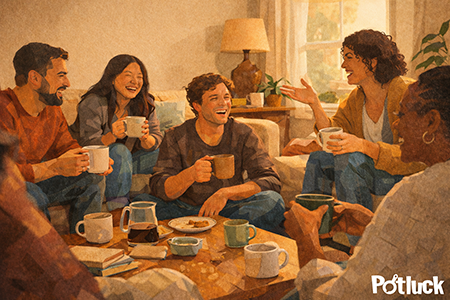
Most people I talk to want the same thing. They want people they can count on. They want their kids to grow up surrounded by familiar faces. They want friendships that feel steady, not fragile.
In other words: they want a village. But villages don’t magically appear.
They’re built — slowly — by people willing to participate.
The Part of Community We Don’t Like to Admit
Here’s the quiet tension underneath most conversations about community: We love the idea of belonging. We struggle with the reality of participation.
Being a villager means: - Showing up when it’s easier to stay home - Bringing something, even when you’re busy - Sitting in a little awkwardness - Helping without being asked. That work isn’t glamorous. And it doesn’t photograph well.
But it’s how community forms.
Participation Isn’t a Personality Trait
Some people seem naturally good at community. They host easily. They gather often. They make it look effortless.
That can make the rest of us assume: “I’m just not wired for this.”
But community isn’t a personality trait. It’s a practice. Like any practice, it gets easier with repetition — and nearly impossible without structure. Most people don’t avoid participation because they don’t care. They avoid it because they don’t know what’s needed, when it’s needed, or how to help without overstepping.
Why Shared Responsibility Changes Everything
When one person holds all the details, everyone else becomes a spectator. But when responsibility is shared: - Participation feels safer - Expectations are clearer - People feel useful instead of intrusive.
This is where gatherings quietly succeed or fail. Not because of food quality. Not because of decor. But because people either feel included — or optional.
Shared responsibility builds stronger communities.
Small Acts Count More Than Big Gestures
You don’t have to host elaborate events to be a villager.
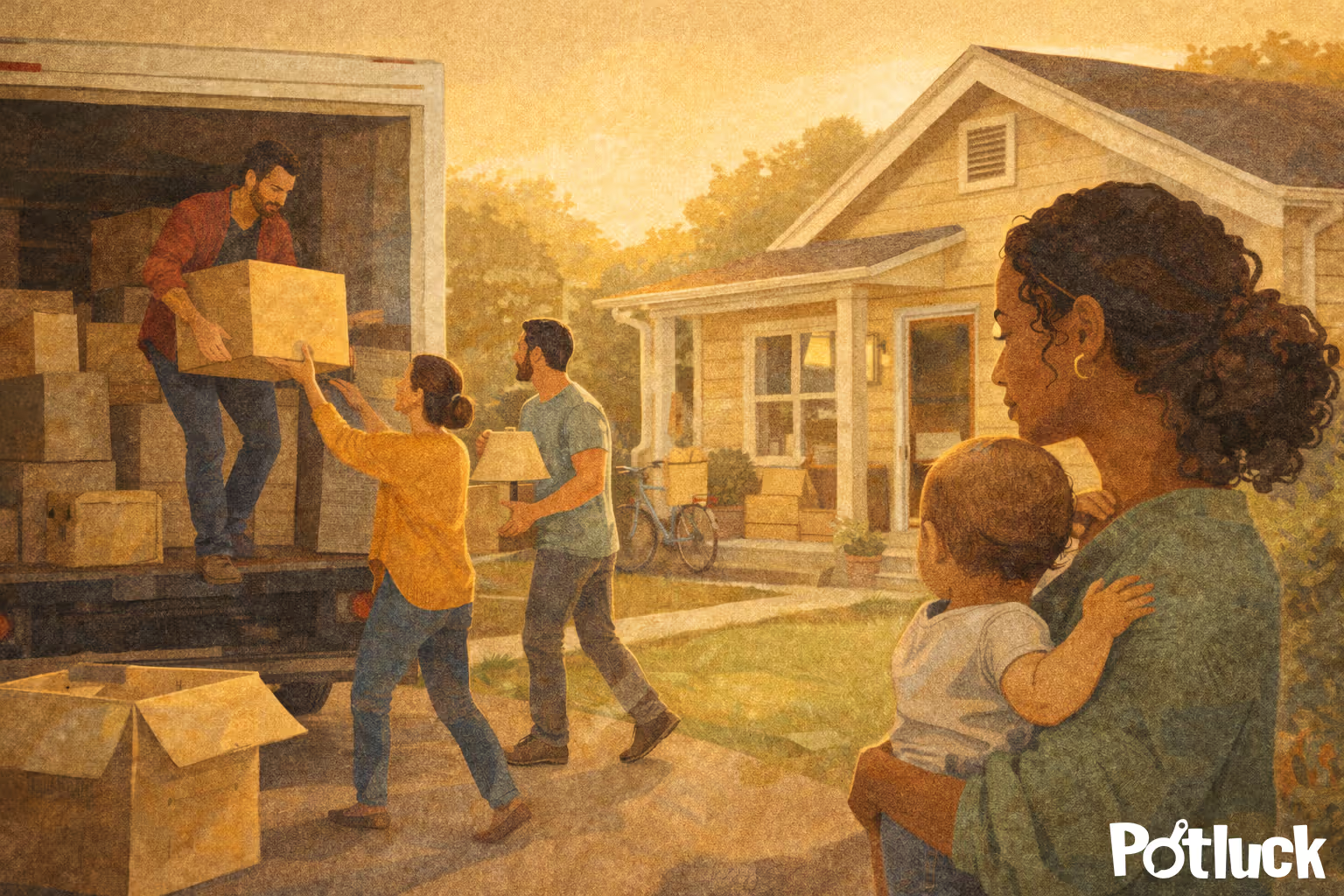
Villages are built through small, repeatable acts: - Signing up to bring something - Helping with setup or cleanup - Watching the kids for ten minutes - Saying yes more often than is convenient. These moments add up.
They create familiarity. Trust. Memory. And over time, they turn attendance into belonging.
Why This Feels Harder Than It Used To
Modern life trained us to be consumers of experience. We attend. We react. We move on.
But community asks us to participate instead. That shift can feel uncomfortable — especially when we’re out of practice. The answer isn’t guilt – It’s design.
When participation is clearly invited and easy to see, people rise to it.
A Better Way to Be a Villager
Being a villager doesn’t require charisma, extra time, or hosting everything yourself. It requires clarity – Clear plans. Clear roles. Clear ways to help.
That’s why planning matters. Not because perfection matters — but because participation does. If it’s worth gathering, it’s worth planning well.
Start Small
If you want a village, start by being one small part of it. Say yes to one thing. Bring one dish. Help with one task.
Connection grows through shared experience. And shared experience only happens when people show up.
This post is part of our ongoing series on why shared experience is the foundation of real community. If you haven’t read it yet, start with our flagship: “Shared Experience Is the Point.”