
Most friendships don’t fade because something went wrong. They fade because nothing happened.
No falling out. No big conflict. Just fewer shared moments, fewer reasons to gather, and more life getting in the way.
Showing up sounds simple. In practice, it’s one of the hardest things we do.
Friendship Isn’t Built on Intentions
We all intend to stay close.
We mean to get together. We think about reaching out. We assume there will be time later. But friendship doesn’t grow on good intentions.
It grows on shared experience.
Without time spent together — in the same place, doing something ordinary — even strong relationships slowly thin.
Not because we stopped caring. But because connection needs repetition.
Why Showing Up Feels So Hard Right Now
Modern life quietly works against togetherness.
Schedules are packed. Evenings disappear. Weekends fill up before they start.
On top of that, we’ve been trained to treat social time as optional — something we fit in after everything else is handled.
So showing up starts to feel like: - Another decision - Another commitment - Another thing to manage
That friction adds up. And the easier it becomes to stay connected digitally, the easier it is to postpone being together physically.
Convenience Isn’t the Same as Connection
Texting is easy. Liking a photo is easy. Keeping up from a distance is easy. But ease isn’t what builds closeness.
Closeness comes from moments that require a little effort: - Leaving the house - Adjusting your schedule - Sitting across from someone, uninterrupted
Those moments don’t scale. And that’s why they matter.
Showing Up Creates Momentum
Here’s the part we often miss: Showing up once makes showing up again easier.
Shared moments create: - Inside jokes - Familiar rhythms - A sense of continuity. Memories turn attendance into belonging.
Without them, every invitation feels heavier — like starting from scratch. With them, gathering feels natural.
Planning Isn’t the Problem — It’s the Solution
Many people assume that planning makes friendship feel formal. In reality, lack of planning is what lets friendships drift.
When plans are vague, showing up requires more energy: - Who’s coming? - What’s needed? - Is this actually happening?
Clear plans reduce friction. They make it easier to say yes. They turn good intentions into real moments.
Planning isn’t about control. It’s about care.
You Don’t Have to Show Up Perfectly
Showing up doesn’t mean: - Staying late - Bringing something impressive - Being “on” the whole time. It means being present.
Ten minutes counts. A simple meal counts. An imperfect gathering counts.
Perfection kills connection. Presence builds it.
Start With One Shared Moment
If a friendship feels distant, the answer isn’t more communication. It’s one shared experience.
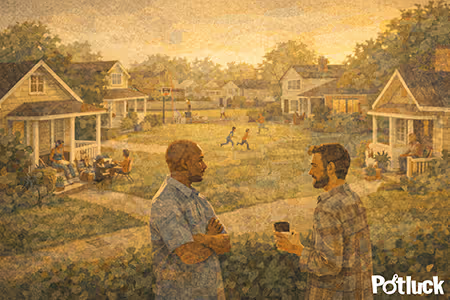
A walk. A casual dinner. A quick porch hang. Something simple. Something real.
Because connection isn’t sustained by constant contact.
It’s sustained by showing up.
This post is part of our ongoing series on why shared experience is the foundation of real community. For the bigger picture, read our flagship post: “Shared Experience Is the Point.”