
When people start planning a family reunion, activities are often where anxiety sneaks in.
There’s pressure to make sure everyone has a good time. To fill the schedule. To avoid awkward lulls. To somehow entertain toddlers, teenagers, parents, grandparents, and that one cousin who only shows up for the food. It’s easy to start thinking the reunion needs programming to succeed.
In reality, the best family reunion activities don’t feel like activities at all. They feel like space—space to talk, laugh, wander, eat, and reconnect in ways that don’t fit neatly into a time slot. The goal isn’t to keep everyone busy. It’s to make togetherness easy.
Let Go of the Cruise Director Mindset
Many planners take on the role of unofficial cruise director without meaning to. They build schedules, plan games, and worry that if nothing is happening, people will be bored. But family reunions aren’t vacations being sold—they’re shared experiences being lived.
Overplanning often creates more stress than joy. It can make people feel managed instead of welcomed, rushed instead of relaxed. When you let go of the idea that every moment needs structure, you make room for the kind of connection that happens naturally.
Shared experience matters more than entertainment. Also remember: once you have a great location, the activities will start to name themselves.
Start With What Brings People Together Anyway
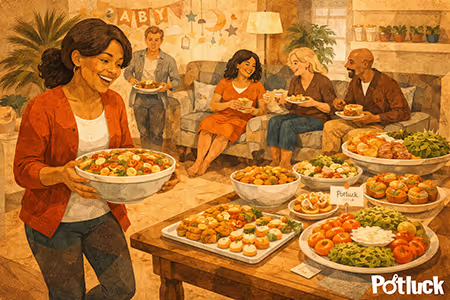
The most reliable source of connection at any family gathering is already obvious: food. Shared meals slow people down and bring generations to the same place without effort. They create natural conversation and rhythm.
Instead of planning many activities, anchor the reunion around a few shared meals or snack times. Everything else can orbit around those moments. When people know when they’ll eat together, the rest of the day tends to organize itself.
Think in Anchors, Not Schedules
Rather than building a full agenda, it helps to think in terms of anchors—simple moments everyone can opt into without obligation.
A short group walk, a casual photo, a storytelling moment after dinner, or a low-pressure game that people can join or leave easily all work well. These anchors create touchpoints of togetherness without demanding constant participation.
The key is optionality. When people feel free to engage at their own pace, they’re more likely to actually connect.
A Simple Way to Choose Activities That Work
If you’re unsure whether an activity belongs, a short filter can help.
1. Can people join without preparation or skill? If it requires instructions, equipment, or advance commitment, it may create friction.
2. Does it work across generations? The best reunion activities allow kids, adults, and elders to participate in their own way.
3. Is it easy to leave without awkwardness? Activities that allow people to drift in and out tend to create more comfort and conversation.
If an activity passes these tests, it’s likely to support connection rather than distract from it.
Leave Space for Unplanned Moments
Some of the most meaningful reunion memories aren’t planned at all. A late-night conversation on the porch. Kids inventing a game that adults slowly join. Old photos pulled out unexpectedly. Stories that only surface when time isn’t tightly managed.
Protecting unstructured time is one of the most generous planning choices you can make. It signals that the reunion isn’t about checking boxes—it’s about being present.
Share Responsibility for Activities, Too
Just like food and logistics, activities don’t need to live on one person’s shoulders. When ideas and responsibilities are shared, planning becomes lighter and more inclusive.
An interactive sign-up sheet makes it easy for family members to suggest or host simple activities without pressure. Someone might offer to lead a walk, bring board games, or organize a casual craft for kids. When contributions are visible, people feel invited rather than assigned.
Shared responsibility builds stronger families, even in how you spend time together.
Remember Why You’re Really Planning
Activities are not the point of a family reunion. They’re support structures for connection. The real goal is conversation that picks up where it left off years ago, relationships that deepen across generations, and memories that feel shared rather than staged.
When planning decisions get overwhelming, return to that truth. Less structure often leads to more joy.
Let the Memories Continue
After the reunion, the experience doesn’t have to end. Moments make it easy for everyone to share photos and memories, reinforcing the sense of togetherness long after people head home.
Those shared reflections are often where the reunion’s meaning fully settles in. Family reunions don’t need forced fun to succeed. They need room to be human.
Plan lightly, gather fully, and let connection do the rest.