Almost every family reunion has the same quiet storyline.
Everyone says they’re excited. Everyone says, “Let me know how I can help.” And then—without anyone explicitly deciding it—one person ends up coordinating dates, tracking food, answering questions, and worrying whether the reunion will fall apart if they stop paying attention for five minutes.
This isn’t because families don’t care. It’s because good intentions don’t automatically turn into shared responsibility. Without structure, planning defaults to the most organized or most invested person. Over time, that imbalance creates stress, resentment, and burnout.
Splitting family reunion planning isn’t about delegating tasks like a manager. It’s about creating visibility so people can step in naturally. When responsibility is shared, the gathering feels lighter—and more genuinely collective. Plus, somebody's gotta pick a location.
Why People Don’t Help (Even When They Want To)
Many reunion planners assume they’re alone because others aren’t willing to help. More often, the issue is uncertainty. People don’t know what’s needed, don’t want to overstep, or assume someone else already has it covered.
When planning happens privately or across scattered conversations, helping requires effort and confidence. When planning is visible, helping becomes easy. Most people want to contribute—they just need a clear, low-pressure way to do it.
Stop Assigning, Start Inviting
One of the most effective ways to share responsibility is to stop assigning tasks individually. Direct requests can feel awkward on both sides, especially in families where roles and dynamics are sensitive.
Instead, invite contribution openly. Making needs visible allows people to choose how they help based on their time, energy, and strengths. That sense of choice changes the emotional tone of planning from obligation to participation.
Shared responsibility builds stronger families because it’s rooted in agency, not pressure.
Make Planning Visible Early
The earlier planning becomes shared, the less weight any one person carries. Creating a single Event page at the start gives everyone access to the same information and signals that this is a collective effort.
When dates, ideas, and needs are visible from the beginning, people understand that the reunion isn’t fully formed yet—and that their input matters. Visibility turns passive support into active involvement.
A Simple Structure That Encourages Help
You don’t need committees or formal roles to split planning effectively. You need clarity and choice.
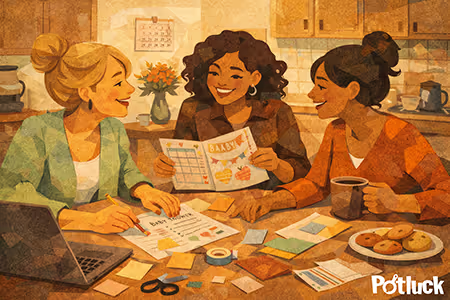
1. Centralize the details. One shared place for information prevents confusion and repeated questions.
2. List needs openly. Food, setup help, activities, supplies, and local knowledge are all opportunities for contribution.
3. Let people opt in. An interactive sign-up sheet allows family members to choose what works for them without being singled out.
This structure does the emotional work for you. It removes guesswork and lowers the barrier to helping.
Share Communication, Not Just Tasks
Even when tasks are shared, communication often stays centralized by default. The planner becomes the point person for every update, clarification, and reminder.
An event chat spreads that responsibility naturally. Questions and answers live where everyone can see them. Family members help each other. Information becomes communal instead of controlled.
When communication is shared, mental load drops dramatically.
Allow Contributions to Look Different
Not everyone can contribute the same way. Some people bring food. Others bring energy. Some handle logistics quietly. Others help by showing up early or staying late.
Equal contribution is not the goal. Meaningful contribution is. When families allow flexibility, more people participate—and fewer people burn out.
What Changes When Planning Is Shared
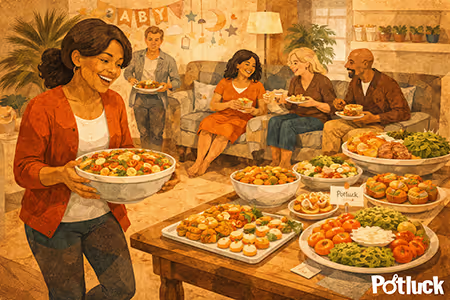
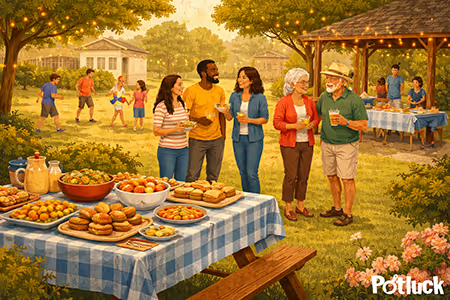
When responsibility is visible and shared, something subtle shifts. Attendance becomes more reliable because people feel invested. Conversations feel warmer because effort has already been exchanged. The reunion starts to feel like something everyone is making together, not something one person produced for others.
Memories turn attendance into belonging—and belonging starts during planning, not just on the day of the reunion.
Let Yourself Step Back
If you’re used to holding everything together, stepping back can feel risky. But shared planning only works if there’s space for others to step in.
You don’t need to disappear. You just need to stop carrying everything silently. Trust the structure. Trust your family. Let planning become part of the shared experience.
Family reunions don’t need a hero. They need a convener.