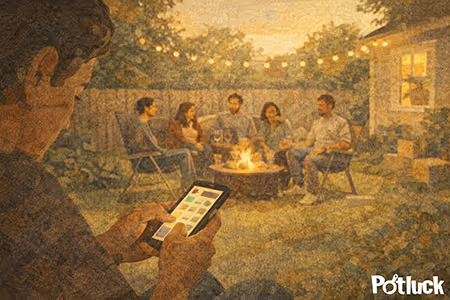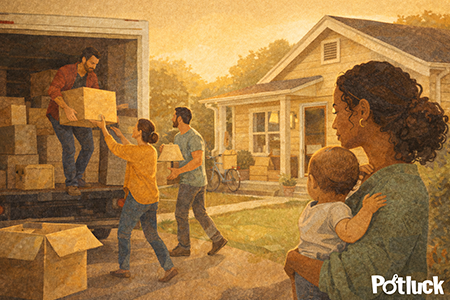
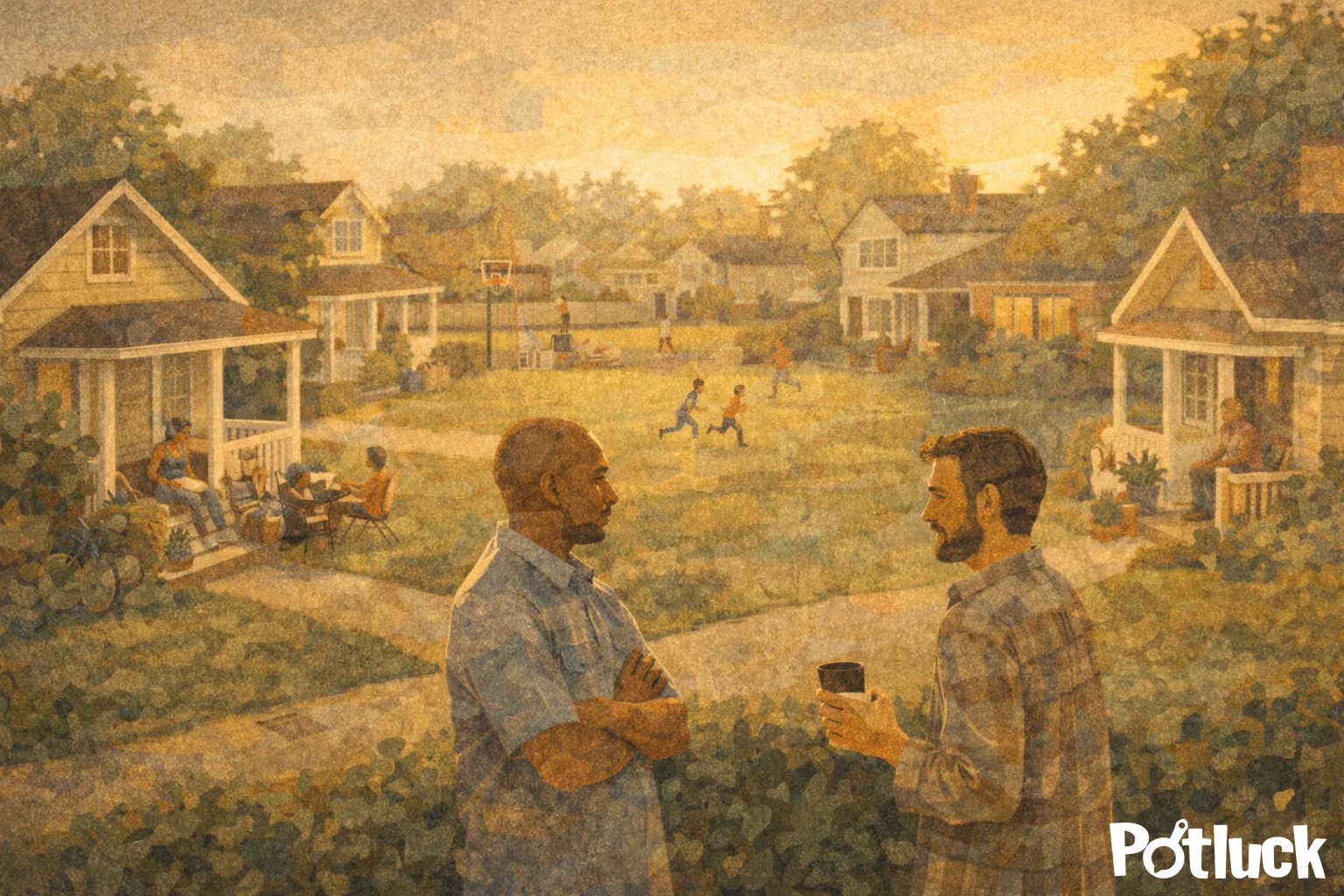
For most of human history, community was shaped by proximity. The people you lived near were the people you shared life with — whether you chose them or not.
Today, we can curate our relationships from anywhere in the world. That freedom has benefits.
But it’s also come with an unexpected cost: we’ve slowly lost the practice of being together with people who are different from us.
Proximity Does Something the Internet Can’t
When you regularly share physical space with people, a few important things happen:
- You see each other as whole humans, not opinions
- Small moments accumulate into familiarity
- Conflict softens through context
It reminds us that people are more than what they believe or post.
That kind of understanding is hard to achieve at a distance.
Agreement Is Not a Requirement for Belonging
Somewhere along the way, we absorbed the idea that community requires alignment.
Same values. Same politics. Same worldview. But that’s never been true.
Strong communities aren’t built on agreement. They’re built on shared experience. Eating together. Helping one another. Celebrating milestones.
You don’t need consensus to pass a dish.
Why Difference Feels Harder Now
Online spaces reward certainty. Clear positions travel farther than complexity. Nuance doesn’t perform well.
That trains us to see difference as threat instead of texture. In real life, difference is unavoidable — and often enriching.
It challenges assumptions. It builds empathy. It expands perspective. But only if we stay in the room.
The Quiet Power of Simple Rules
Good gatherings don’t avoid difference. They create conditions where connection can come first.
That’s why simple social agreements matter: No politics. No religion.
Not because those topics don’t matter. But because shared meals, laughter, and time together matter more in those moments.
Boundaries protect the gathering.
Neighbors Matter More Than Networks
It’s easy to invest energy in distant connections that feel safer or more affirming.
But the people who shape our daily lives most are the ones we see regularly:
- The neighbor down the street
- The parents at school pickup
- The people who show up to the same gatherings
Physical proximity creates accountability — and opportunity.
It gives relationships a chance to deepen beyond surface-level agreement.
Gathering Is a Practice of Tolerance
When people gather in person, something subtle shifts. It becomes harder to reduce others to labels.
You notice humor. Kindness. Effort. You remember shared moments. Those experiences don’t erase differences.
They put them in perspective.
Start With the People Around You
You don’t need to solve polarization. You just need to gather.
Invite the people who are already nearby. Keep it simple. Set clear expectations.
Let shared experience do what arguments never can.
Connection grows through proximity.
This post is part of our ongoing series on why shared experience is the foundation of real community. For the full perspective, read our flagship post: “Shared Experience Is the Point.”